Summary
✨ AI‑Generated
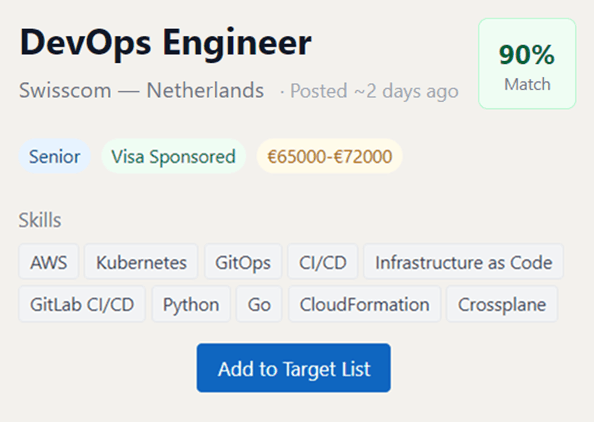
A remote DevOps Engineer will own production infrastructure spanning containers, virtualization, databases, CI/CD, infrastructure as code, networking, observability, security, and automation. The role also supports data and machine-learning workloads and emphasizes reliable operations and proactive monitoring.
Highlights
Fully remote, full-time DevOps role with broad ownership of infrastructure, automation, high availability, observability, security, and data/ML workloads.
Description
What you'll do
Build, deploy and run Docker containers in production, including our private registry and orchestration with Nomad + Consul
Manage on-premise virtualisation on Proxmox VE: VMs, storage, networking, backups and capacity
Run PostgreSQL and Redis in high availability: replication, failover, backups and tested restores
Build and maintain CI/CD pipelines on GitHub Actions, including self-hosted runners
Manage infrastructure as code with Terraform and Ansible
Run the API gateway, load balancers and reverse proxies (APISIX, NGINX, Caddy)
Own observability with Prometheus, Grafana, Loki and Promtail, including alerts for disk, backups and service health that catch problems before users do
Harden access and security: bastion hosts, SSH, IAM/RBAC, firewalls, secrets management and container image scanning
Support data and ML workloads (Kafka, Airflow, vector databases, model deployment)
Automate repetitive work with Bash, Python and Cron
Write runbooks, architecture diagrams and post-incident RCAs, and take part in on-call
Must have
3+ years in a DevOps / SRE / platform role
Strong Linux administration on both RHEL-based and Debian-based systems
Solid Docker skills: writing efficient Docker files, image versioning, registries, networking and volumes, and debugging containers in production
PostgreSQL administration, including backup and restore
CI/CD with Git and GitHub Actions or GitLab CI, and a Gitflow-style branching workflow
Terraform and/or Ansible
Monitoring and alerting with Prometheus and Grafana
Scripting in Bash and Python
Cloud networking and security basics: SSH, firewalls, IAM, object storage (S3-compatible)
Clear written documentation in English
Nice to have
HashiCorp Nomad + Consul (strong plus), Vault
Proxmox VE or KVM Virtualisation, and on-premises server management
PostgreSQL HA with Patroni and PgBackRest; Redis Sentinel/Cluster
Kafka, Airflow or Flink
Vector databases Qdrant and MLOps tooling
Container security (image scanning, least-privilege runtime)
APISIX or another API gateway; Wire Guard/VPN
Confluence/Jira and Kanban