Summary
✨ AI‑Generated
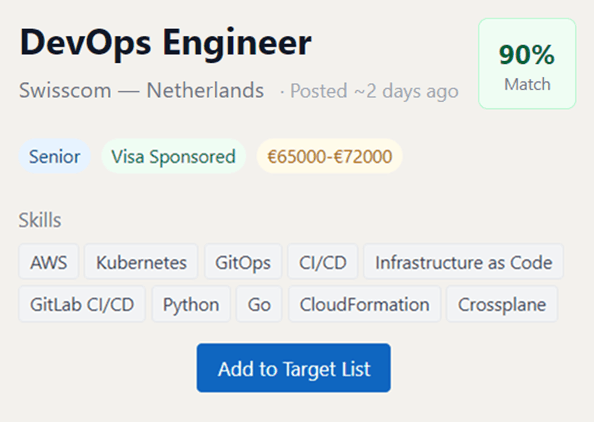
A DevOps role responsible for building secure and scalable cloud environments, automating deployments, managing Kubernetes infrastructure, and improving system observability for high-volume applications.
Highlights
Work on highly scalable cloud infrastructure, automation, reliability engineering, and modern deployment practices.
Description
About The Role
The role owns the reliability, scalability, and security of core cloud infrastructure supporting high-volume microservices and real-time data pipelines.
The team works closely with backend and platform engineers to build robust CI/CD pipelines, automated monitoring systems, and resilient distributed environments.
Key Responsibilities
Design, provision, and manage production cloud infrastructure on AWS or GCP using Infrastructure as Code tools such as TerraformBuild and maintain automated CI/CD deployment pipelines using GitHub Actions, GitLab CI, or ArgoCD to streamline releasesManage Kubernetes clusters in production, ensuring optimal resource utilization, auto-scaling, and high availabilityImplement comprehensive observability stacks using Prometheus, Grafana, and Datadog for real-time monitoring and incident alertingConduct security audits, manage IAM policies, and enforce compliance standards across all infrastructure layersParticipate in an on-call rotation to troubleshoot and resolve infrastructure incidents, performing root cause analysis for system failures
What We Are Looking For
3–6 years of experience in DevOps, Site Reliability Engineering, or a closely related infrastructure roleStrong proficiency in Infrastructure as Code (Terraform, CloudFormation) and configuration management toolsHands-on experience with containerization technologies and orchestration platforms, specifically Docker and KubernetesSolid scripting skills in Python, Bash, or Go for automation and tooling developmentDeep understanding of networking fundamentals, TCP/IP, DNS, TLS, and VPC architecture in cloud environmentsBonus: Experience with service mesh technologies (Istio, Linkerd), eBPF observability tools, or FinOps cost optimization practices